

Dunhamisms #7
Illness as metaphor

“Illness is the night side of life, a more onerous citizenship. Everyone who is born holds dual citizenship, in the kingdom of the well and in the kingdom of the sick. Although we all prefer to use the good passport, sooner or later each of us is obliged, at least for a spell, to identify ourselves as citizens of that other place.”
-Susan Sontag, Illness as Metaphor
“Illness is a part of every human being’s experience. It enhances our perceptions and reduces self-consciousness. It is the great confessional; things are said, truths are blurted out which health conceals.”
-Virginia Woolf, On Being Ill
We knew it was inevitable. And here it is. The illness “issue” of Dunhamisms (issue! LOL. Seven advice columns down and I’m acting like I run a weekly gossip rag in the 90s.)
Whether you’re a bed creature or a sun-worshipping globe trotter, hopefully there’s something here that still resonates… cuz we all have a body! Unless you’ve managed to avoid that, in which case spill the deets in the comments.
Hi Lena,
My question is to do with living with chronic illness. I am 32 and have been going through cycles of burnout my whole life. In the past few years, I’ve noticed more symptoms, slower recovery and an underlying fatigue that is always there. Going out for dinner on a weeknight might make me unable to function the next day.
I’ve recently been diagnosed with Ehlers-Danlos Syndrome, which I know you also have, and am coming to terms with how my life might have to adjust as a result; I might be too fatigued to have bio children, work full-time, generally do the things I want to do. I enjoy my life for the most part, but when I see peers my age I realise how small my world has become and I am often overcome with grief.
How do you:
a) come to terms with your new reality of being unwell and needing to rest a lot
b) stay positive and not have despair about the growing list of things your body is struggling to do
c) (metaphorically) walk through the grief
d) rest without being glued to a screen
e) accept weight gain in a world that has taught women to hate themselves if they have a visible double chin?
At the moment I am struggling to not catastrophise when my symptoms are particularly bad and expect everything to be difficult forever, which I know is counterproductive but it is so hard!
My husband jokes about getting me a tattoo which says ‘if found vertical, please readjust until horizontal’ and I feel an affinity with you with that.
From one Shosh to another xx
Oh, my sweet Shosh, my horizontal homie, my fatigued friend ♥️
I felt this question in every burning cell of my bendy body, in every open pore of my second chin. I felt the relief that comes with a new diagnosis, but the pain of realizing it may not be accompanied by answers. I’m so glad you found a doctor who witnessed your suffering and named it for you, and so sorry that you’ve been experiencing such a density of pain, fatigue and anxiety (the unholy trinity, if you will.)
Because you were good enough to bullet point your questions, I will respond in kind:
How do you:
a) come to terms with your new reality of being unwell and needing to rest a lot
The short answer is, you don’t fully… As long as you’re missing a world that once felt vast- and a body that once felt present and powerful- then you are going to feel grief for the things you have lost, and all that you assumed you still had ahead of you.
b) stay positive and not have despair about the growing list of things your body is struggling to do
BUT… The more involved/evolved answer is that this grief isn’t something to deny, to beat into submission- it comes and goes and comes again and life, well, life goes on right alongside it.
c) (metaphorically) walk through the grief
I have kept a running list of all the ways in which being sick has actually given me a better life than I had as a “healthy” person. This didn’t become apparent to me in the first year after my health deteriorated, or the second or even the third. There had to be some “fuck this shit” years to even start to think this way. But now it’s so abundantly clear to me that almost everything I love about my life, that I appreciate in myself and my relationships, are changes that were necessitated by ill health.
Maybe I’m just a Pollyanna who needs to believe this so that I don’t descend into rage or regret (two of the worst feelings!) and I’m certainly not dismissing the many people who do *not* want to think of their bodies betraying them as “a gift.” It’s also important to note that I don’t think we get sick for a reason, I don’t believe bad things happen to us in order to teach us lessons. I think that entire approach- a sort of lazy Los Angeles pseudo-Kharmic dialectic of cause and effect- is a way for privileged people to convince themselves they “deserve” what they have and those who are suffering to be made to feel they just haven’t tried hard enough, or that they’re being punished for some unnamed sin. Bullshit!
So the gifts illness has given me are, in a sense, as random as little toad stool mushrooms sprouting after a rainstorm. No one cultivates them, but now they’re here! And they’re still worth celebrating.
So here is what’s true for me:
After three decades of running as fast as I could- from difficult emotions, omnipresent anxiety and traumatic memories- illness slowed me down.
It forced me to recognize that neither time nor energy (mine, anyone’s, the earth’s) are unlimited resources.
It revealed the best parts of the people who love me, and forced me to really and truly receive their care.
It allowed me to understand the difference between sympathy and empathy. It made me less judgmental, harder to offend, and grateful for what people could give rather than tallying up what they couldn’t. It made me offer myself without expecting anything in return.
d) rest without being glued to a screen
I have created a universe inside of every bedroom I’ve ever had.
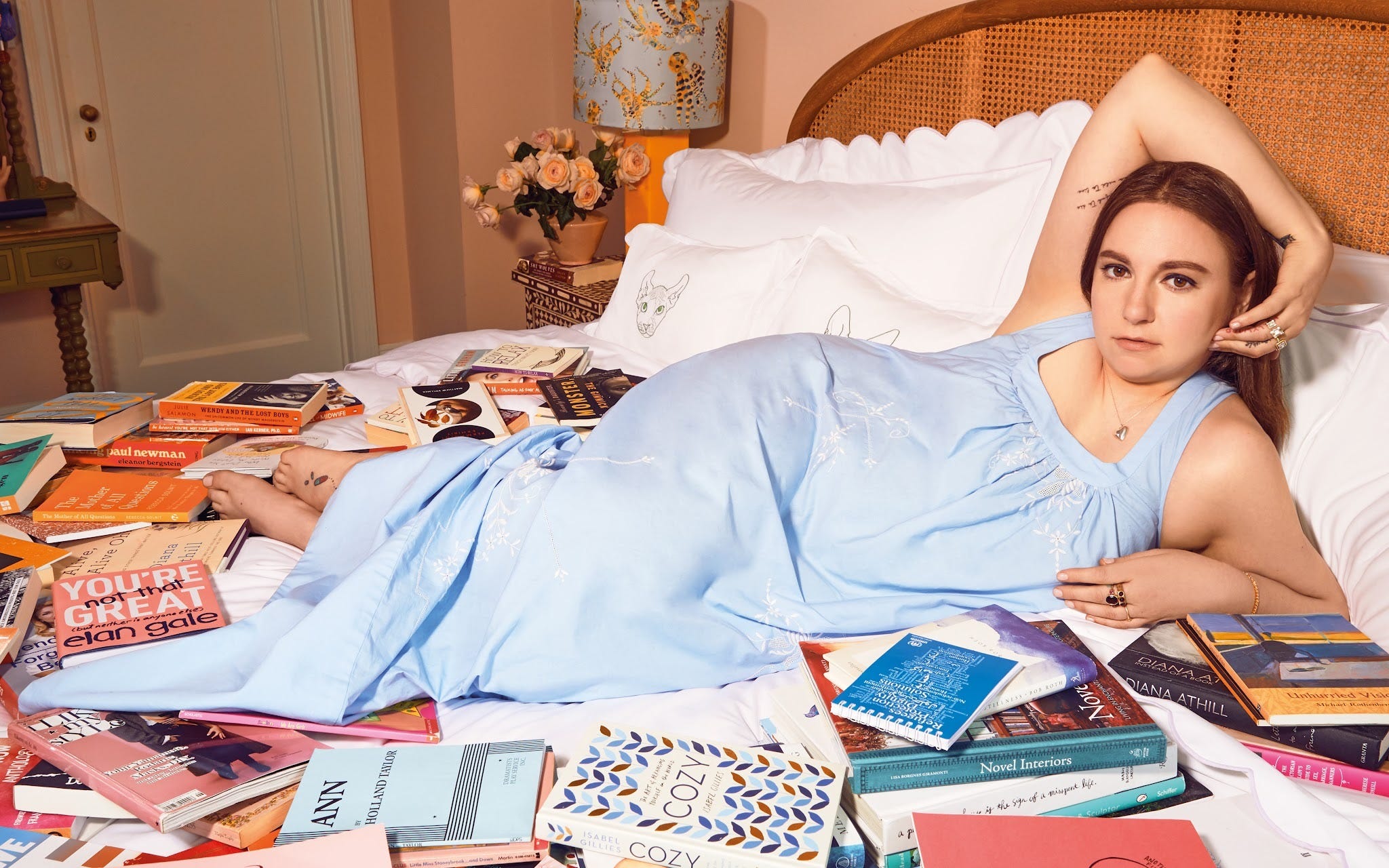
A bedroom has its own architecture, geography, flora and fauna, solar system. Everything- from the teetering piles of books to the endless tchotchkes to the temperature- is by design and reflects what makes sense to me and what works for my body. Over time, I come to find whatever view I wake up to be fascinating, and watching the light rise and fade on the wall becomes a form of meditation. My last New York apartment was across from the college I went to for a year when I was eighteen, and at first watching all of those hopeful freshmen in puffer coats was a dagger to my wounded heart. But over the year I lived there, it became like watching cardinals at a bird feeder. I had favorites. I followed their couplings. It was sweet.
The time I spend out in the world- traveling, filming, meeting people- is almost exclusively for work. During breaks between projects, I’m regaining my strength or prepping new work, and that’s 99.9% from home. The other night onstage *the* Stevie Nicks said it was her first time in the Metropolitan museum “or really any museum… I go on the road, and that’s what I sing about.” Beautiful. I get it.
That might bore some people, living life in two modes and two modes only, but for a long time I couldn’t even *do* the work part at all.
This was kinda my vibe:

I felt my passion for life powering down like a non-refillable vape, my youth ticking by like a snow day- and so I’m wildly thankful for every adventure and diversion I can now undertake. But today for example, I had a post Met Gala crash/flare (the result of cortisol being ramped up, the joint and muscle inflammation that comes from wearing heels, not enough sleep- that bill is always gonna come due sometime! What goes up must come down!) In my bedroom, listening to the rain, I recognize I have no option but to be kind to myself and accept what my body is asking for. So I pop on an audiobook and crack a window, enjoying the cool, wet wind and Patrick Radden Keefe’s crisp pronunciation.
I’ve come to believe that if you’re really in dialogue with your own passions, life can be just as interesting when viewed through a window as when experienced via motorcycle trip or whatever. Think of famously insular artists, like Emily Dickinson- who barely left the family homestead after the age of thirty five- or Yayoi Kusama, who has lived by choice in a psychiatric hospital in Japan since the 1970s.
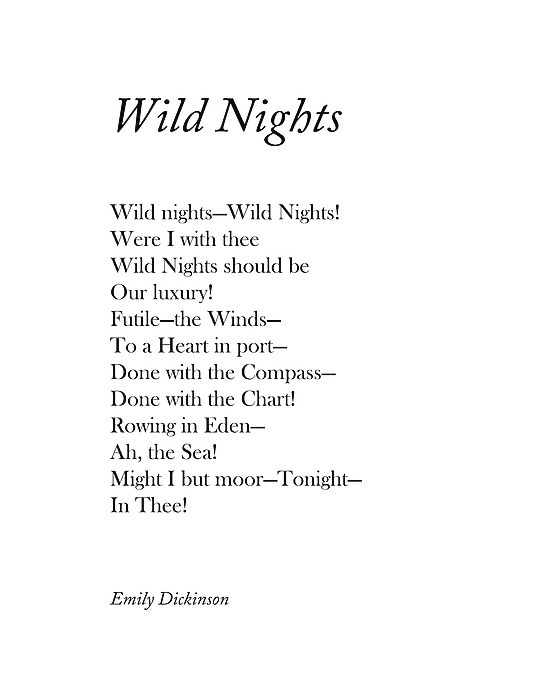
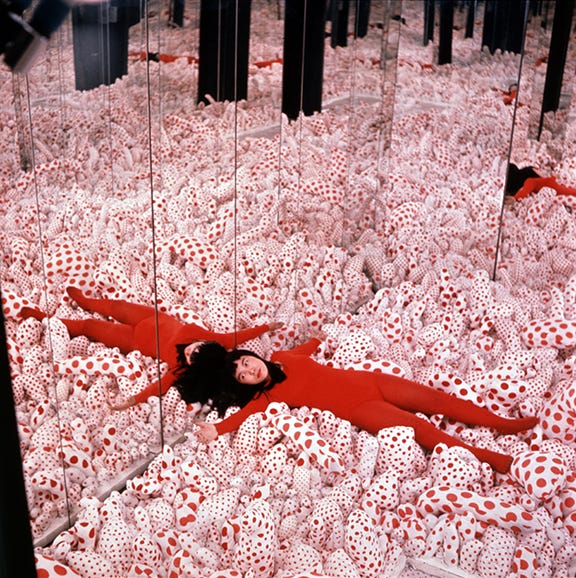
The depth and diversity of their expression makes it clear that being loyal to one spot is not, strictly speaking, a limiting factor.
They know things, from the bottom of their souls! Not despite their contracted physical realities, it would seem, but because of them.
e) accept weight gain in a world that has taught women to hate themselves if they have a visible double chin?
I wanna kick this one off to one of my most favorite artists, Eloise Grills. Her book Big Beautiful Female Theory changed the course of my life, without question. It found me at a moment when my health was slowly improving and my weight was not-so-slowly creeping up, and I found myself wondering- genuinely- if I’d rather feel worse and be thin again or keep healing and see what I saw in the mirror. The fact that this was even a question is yet another reminder that a screw is loose in how we think about beauty! Our culture is sicker than we are! We are absolutely bananas!
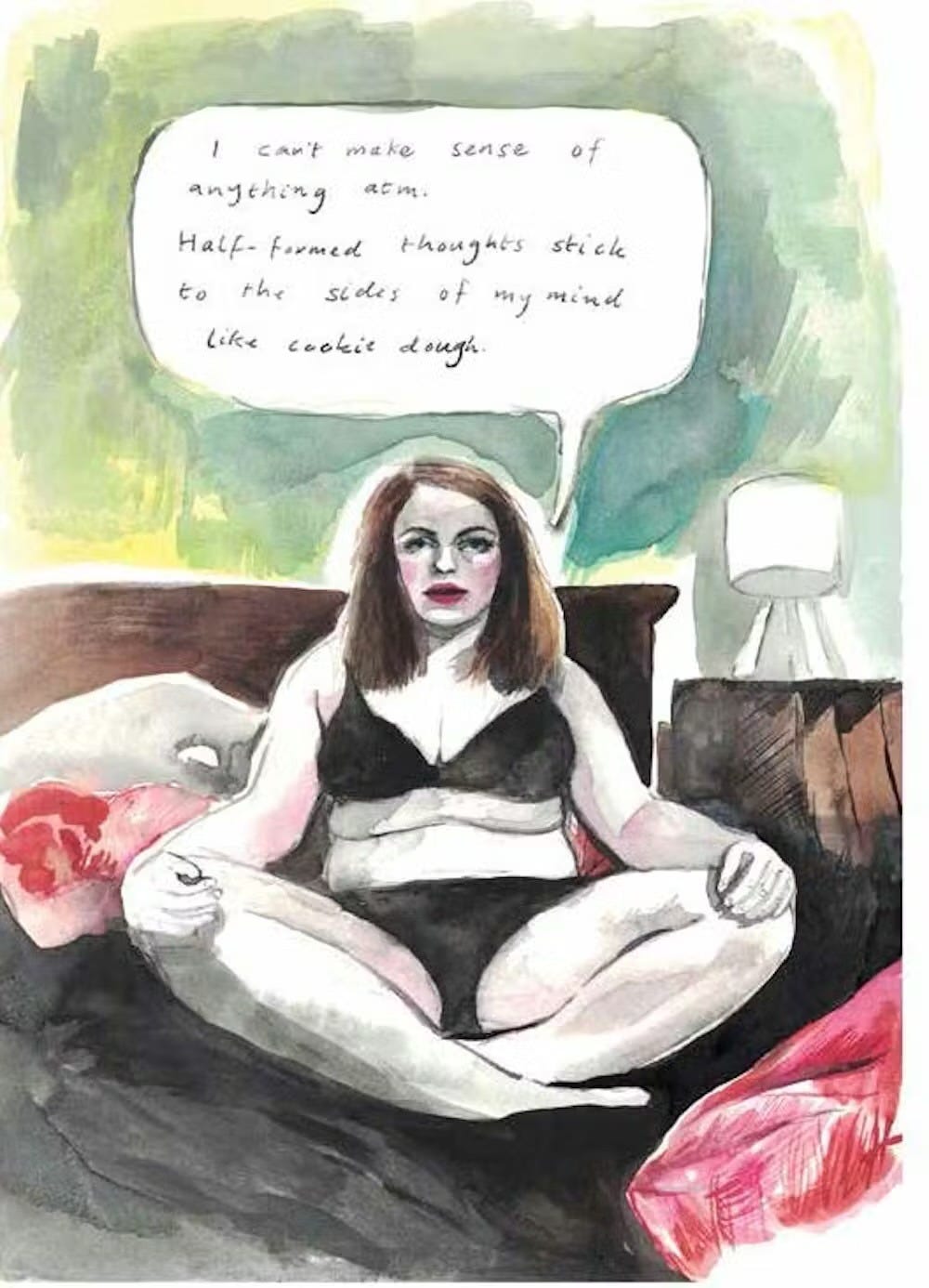
And so I’d like to prescribe Eloise’s book as a panacea. We can’t change what’s reflected back at us, but we can arm ourselves with art that tells a different story.
🦓love,
Lena
There’s something so important about the way you write. It feels honest in a way that soooo much writing doesn’t anymore, and it always leaves me thinking about my own life differently afterwards. Really grateful your words exist
I’ll make a more coherent comment when the tears stop welling in my eyes - oh to be seen and understood and the grief ….