

Famesick- three parts inspiration, one part perspiration
Memoirs that carried me through the seven year writing process

Many years ago, someone I loved told me that memoir wasn’t a real art form. I knew this wasn’t true- after all, I’d grown up gobbling up every woman’s memoir I could locate, and they arguably had more of an influence on my work than any film, novel or photograph ever did- but I had reached a place where I didn’t trust my own thoughts anymore. It’s an easier place to reach than I’d ever imagined–having always, for better or worse, had quite a lot of my own thoughts–and I loved this person in a way that gave everything they said a sort of professorial gravity, like they were speaking to me from a pulpit even if we were just across a diner booth from each other. “Anyone can write a memoir, and they do,” they chortled. It was, ostensibly, a comment meant to point me in the correct direction, to give me an artistic steer. But it had the effect of worming its way into my head like so many Twitter bots, reminding me that my desire to explain my own story–to others, to myself–was naval gazing, unnecessary, and without essential merit.
I’d like to say that I was able to disabuse myself of this notion quickly, but as I wrote Famesick–my new book, available to pre-order now–over seven years, I spent more time than I’d like to recount wondering what it was all about. As I traced the story of my twenties–the artistic highs, the all-too-public public lows, the health crises that nearly took me out of the game but that never hurt quite as much as the interpersonal ones–I was haunted by a nagging voice (one that was actually quite new for me) asking “bitch, who the fuck cares?” There’s nothing like getting your back blown out by life to make you realize that everyone, fucking everyone, has been there too. My first book, a collection of essays, had erupted from me in a matter of months, with a playful ease that now seems distinct to being twenty six and in the mix. Things looked fairly different in the dark days of Covid, alternating between hot flashes and cold dread. But I kept writing, largely because I didn’t know what else to do–it had always been my savior, and if Mother Theresa questioned the existence of God then I hoped I could question the necessity of memoir and make it out the other side.
But it wasn’t writing my own book that convinced me memoir–particularly memoir by women–is as essential to our cultural health as free speech and Love Island UK. It was reading memoir by women and seeing how, page by page, it kept me company. That company was what gave me the strength to stop living life by a set of instructions given to me by people who weren’t even in the room anymore. I’m not bold enough to call my own book life-saving–at least not to anyone but me. However, just remembering that a book can feel like an outstretched hand was enough to right the capsized canoe that was my inner life.
Below, a list of the books that made writing Famesick possible.
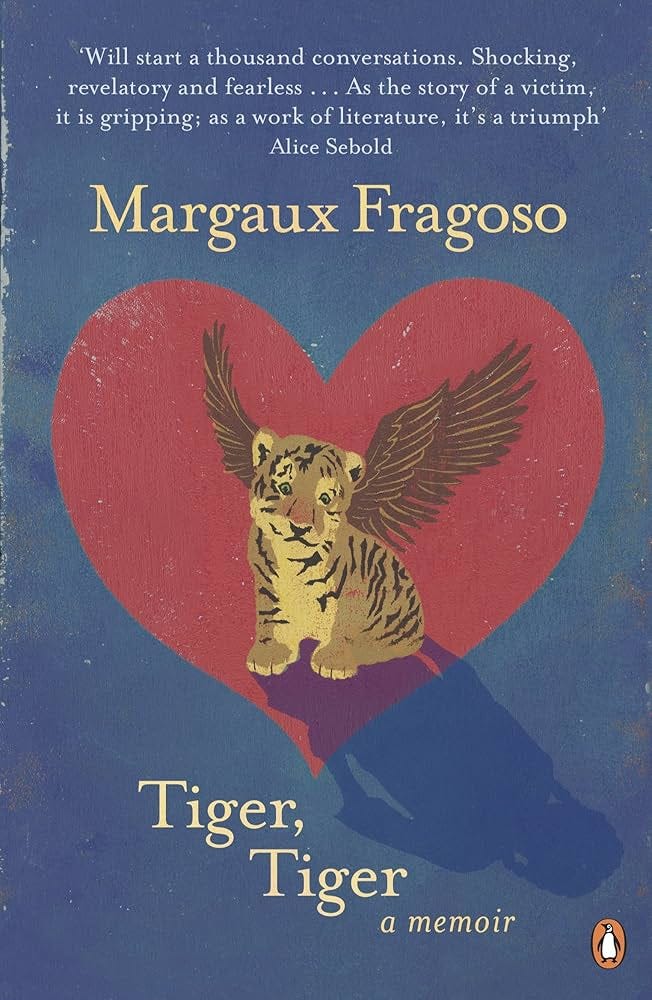
Tiger, Tiger by by Margaux Fragoso (2011)
This is a confrontational book that resists all easy answers and all tidy explanations. The story of the author’s childhood of benign neglect turned to longterm sexual abuse at the hands of a neighbor, does the impossible- managing to be in turns bracingly painful, repellant, sweet, funny, angry and zen. Fragoso is no longer with us, her writing career cut far too short by cancer, but her story remains a shining example of what happens when women write with the ferocity of big cats.
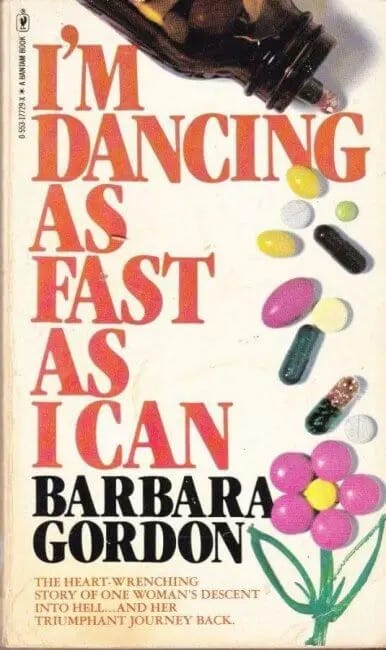
I’m Dancing As Fast As I Can by Barbara Gordon (1979)
Barbara Gordon has it all- a high powered job, a seemingly divine boyfriend- but she’s hiding an addiction to Valium so mighty that she needs to leave lunch meetings to crunch a few pills down. A victim of lazy psychiatry and the “having it all” genre of feminism, she doesn’t know she’s fucked until it’s way, way too late. Her story takes her to places she never imagined she would go- you may gasp as her relationship descends into captivity and she is institutionalized for the psychiatric break caused by quitting the drug cold turkey, but you will also laugh, nod with recognition, and be delighted by the fact that even in the cold halls of a 1970s asylum, she manages to have hot sex with an acid head and produce the hell out of psych ward social events. My story and Gordon’s bear more than passing similarities–my accidental dependence on Benzodiazepines marked the toughest chapter of my life–but I never had her great sweaters, pussybow blouses or utter conviction that her pluck would take her into a new era. She taught me all of that.
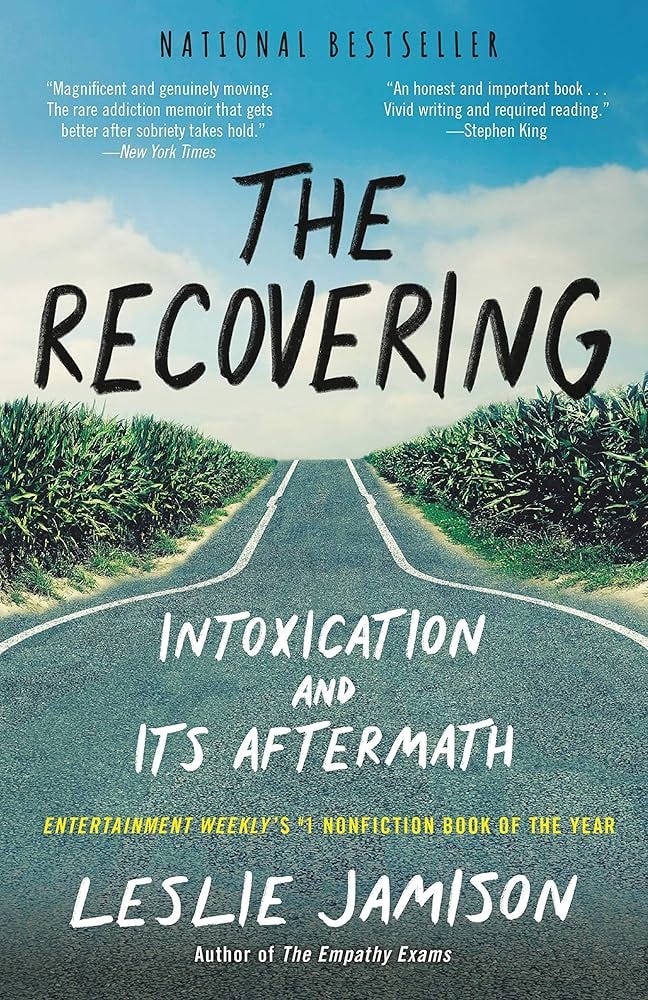
The Recovering by Leslie Jamison (2018)
Addiction memoirs are a genre almost as robust as “lakehouse murders” and “vampires who fuck”- but in a sea of these stories, Leslie Jamison is one of one. She brings her signature depth and verbal pyrotechnics to a story as old as time- alcoholism and its discontents–proving that there’s no such thing as too well trod a path, as long as you’re walking it your way. Bonus points if you also wolf down The Empathy Exams and Splinters.
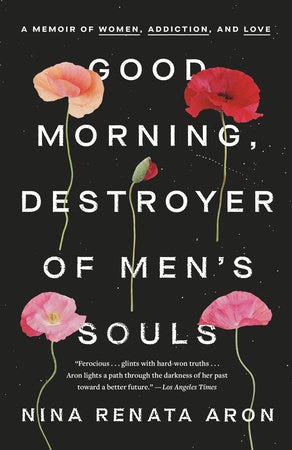
Good Morning Destroyer of Men’s Souls by Nina Renata Aron (2020)
Addiction’s creepy twin sister, codependency, has only really crept into the mass vocabulary in the last ten years. It used to be that going to the ends of the earth for a sick and suffering person was glorified in films where “a mother stops at nothing” or “a wife fights for her family” or “a teenage girl refuses to let her best friend slip into the abyss.” (I made up those loglines, but did I really?) But, in her memoir about her longterm love affair with a junkie, Nina Renata Aron explains just how dangerous this kind of rhetoric really is. Refusing to ever speak in platitudes or to offer easy answers, and delving deep into the allure of the bad boy who shows his truth only to you, Aron lays herself bear while also exploring, with academic precision, the historical concept of the martyr, and the dangers of being one.
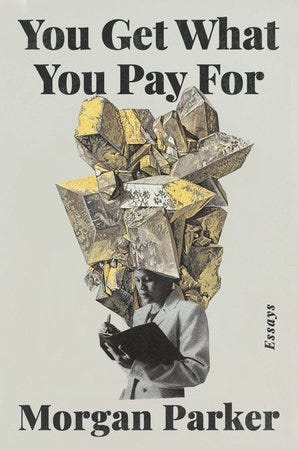
You Get What You Pay For by Morgan Parker (2024)
In this essay collection that is part memoir and part cultural reckoning, Morgan Parker- among my favorite living poets–examines her own history of depression as she also looks at moments that have defined Black culture, both from within and without. Parker is seemingly incapable of writing a cliche sentence, which makes the highwire act of melding intimate personal narrative with her critical voice even more impressive. It’s the most successful example of using pop cultural touchstones to speak about the interior life–specifically the life of the writer, built on connection and yet essentially isolating- that I have yet to read.
Each of these women made me braver on the page — and I’d be honored if Famesick can do the same for someone else.
I LOVE a niche list that includes books not recently published!!
This is the best description of the urgency of memoir that I have read. I read memoir with a searching bottomless hunger unlike any other genre.
Sarah Manguso said "Those who claim to write about something larger and more significant than the self sometimes fail to comprehend the dimensions of self."
Even fiction that is memoiristic (like Russian Doll) just hits different.
I highly HIGHLY recommend:
- Emily Witt's Health and Safety that came out last year
- A Journal of Solitude by the poet May Sarton.
- Sarah Manguso's The Two Kinds of Decay
- I feel like everyone here has read Maggie Nelson's Bluets, but if not, strap the fuck in.
What else should I read?